

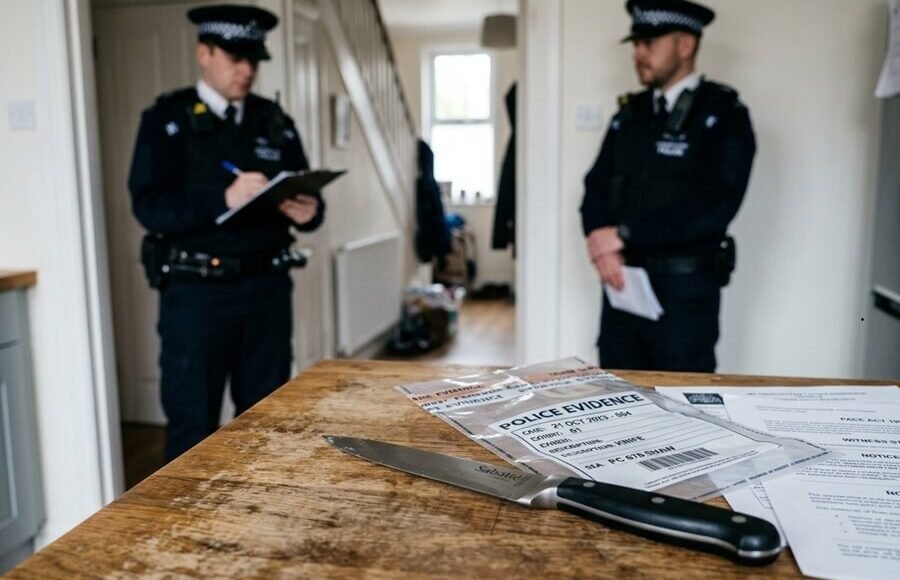
Not in the way the question implies. Sections 30 and 31 of the Crime and Policing Act 2026 give police a power to seize a legally held knife they suspect will be used in unlawful violence, but that power doesn’t let them force their way into a home to look for one. It only applies once an officer is already lawfully on the property for some other reason.
Quick Understanding
- No, police can’t enter your home for this, they need to already be there lawfully for another reason
- Yes, they can still seize a knife you own legally if they suspect it’ll be used in violence
- They only need reasonable grounds to suspect it’ll be used in unlawful violence, not proof you’ve done anything wrong
- No, this isn’t law yet, so it doesn’t apply to you right now
- Yes, you can apply to a magistrates’ court to get it back if the seizure wasn’t justified
This power does not give police any new right to enter a home, it only applies once an officer is already lawfully inside. That distinction gets lost in a lot of the coverage around this part of the Act.
What Sections 30 and 31 Actually Say?
Section 30 allows a police officer, of any rank, to seize a bladed article found on private premises where they have reasonable grounds to suspect it will be used in connection with unlawful violence. Section 31 applies the identical power to service police in the armed forces.
The article doesn’t need to be illegal, unusual, or even look dangerous on its own. A kitchen knife, a tool, or a perfectly ordinary legally owned blade all fall within scope if the officer’s suspicion meets the required threshold.
What “Lawfully on the Property” Actually Means
This is the part most coverage glosses over. The power says nothing about how an officer gets onto the property in the first place, it assumes they’re already there lawfully through some other route: executing a search warrant for an unrelated matter, responding to a call with the occupier’s permission, or attending under an existing power that already allows entry.
Nothing in Sections 30 or 31 creates a new reason to come through the door. If an officer has no lawful basis to be in a home, this power gives them none either.
The Suspicion Test
Once lawfully present, the officer needs reasonable grounds to suspect the item will be used in connection with unlawful violence. That’s a lower bar than proving a crime has already happened, and it applies regardless of whether the knife was bought legally, has been in a kitchen drawer for years, or belongs to someone with no criminal record at all.
Context matters here more than the object itself. The same knife sitting in a kitchen is unlikely to meet the threshold, the same knife found during a domestic incident, alongside threats or a history of violence, is a different picture entirely.
What Happens to a Seized Knife?

Officers who seize an item under this power are required to keep a written record, including a description of the item and the reason given for the seizure. From there:
- The item may be retained
- It may ultimately be destroyed
- A record has to exist that can be checked or challenged later
That paper trail is the main safeguard built into the power, since there’s no independent authorisation needed before the seizure itself happens, unlike a warrant.
How to Get back a Seized Knife?
An owner who believes a seizure wasn’t justified can apply to a magistrates’ court to have the item returned. The court decides whether the seizure was reasonable based on the circumstances at the time, not with the benefit of hindsight.
This route exists specifically because the power itself doesn’t require prior judicial sign-off, the check happens after the fact rather than before.
Where Things Currently Stand
As with several other headline measures in this Act, Sections 30 and 31 haven’t been switched on yet. A block of provisions, covering things like vehicle seizure and digital evidence rules, commenced on 29 June 2026, but the Act’s main knife crime measures weren’t part of that batch. They remain listed as awaiting separate commencement regulations, according to GOV.UK’s own knife crime and crossbows factsheet. The same factsheet covers the Act’s online sales rules for crossbows, and those crossbow age and delivery checks are likewise prospective on legislation.gov.uk.”
The same pattern applies elsewhere in the Act. The retail worker assault law created by this legislation sits in the identical “awaiting commencement” category, despite passing through Parliament at the same time as this knife seizure power.
How This Differs From the Separate Warrantless Entry Power?
The Act also contains a genuinely different power that gets confused with this one: the ability to enter premises without a warrant specifically to recover stolen property that’s been electronically tracked to that location. That power amends existing theft legislation, applies only to tracked stolen goods, and requires authorisation from an inspector. It has nothing to do with knives, and as with the knife seizure power, it also hasn’t been commenced yet.
Treating the two as the same thing is where most of the “police can now enter your home for knives” framing online comes from, and it isn’t accurate for either power as written.