

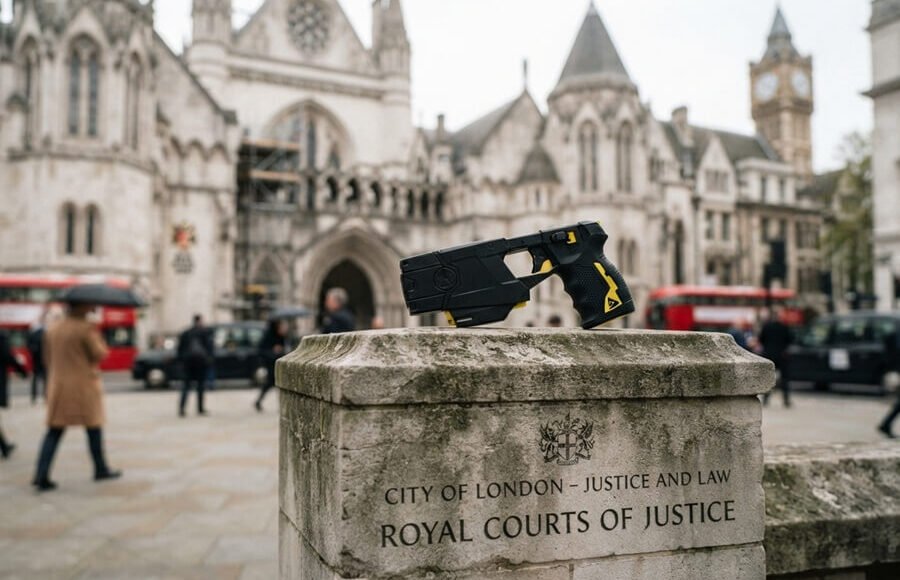
Tasers and stun guns get lumped together in most guides on this topic, and the underlying law does treat them the same way in most respects. Where they diverge, in the specific case of a device disguised as something else, is a distinction worth getting right, since it changes the sentencing exposure considerably. A taser […]

Poppers are widely sold in the UK, in shops, at festivals and online, usually labelled as room aromas, leather cleaners or nail varnish removers rather than as a drug. That labelling isn’t just marketing. It reflects a genuine, unresolved gap in how the law treats them. Poppers sit in a category the law was never […]
Pepper spray, sometimes sold as OC spray, CS spray or mace, is not something you can lawfully carry in the UK under any circumstances. The law treats it as a prohibited firearm rather than a self-defence product, and that classification carries real consequences if you’re stopped with one. Carrying pepper spray “just in case” is […]
An MS90 is the DVLA endorsement code for failing to provide driver details when the police request them, under section 172 of the Road Traffic Act 1988. It isn’t a driving offence in the traditional sense. It’s a separate offence for not confirming who was driving when asked, and it often results in a conviction […]
When a court imposes a prison sentence, it does not always mean the offender will be taken into custody immediately. In some cases, the court may decide that the sentence can be served in the community, provided the offender complies with certain conditions and does not commit further offences. This is known as a suspended […]
Helping someone after they have committed a crime might seem like an act of loyalty, but in certain circumstances it can become a criminal offence itself. If you knowingly help someone avoid arrest, prosecution or punishment, your actions could amount to assisting an offender under UK law. Not every act of assistance is illegal, however. […]
If someone is found not guilty of a criminal offence, many people assume the case is closed forever. In most situations, that is true. UK law generally protects individuals from being prosecuted more than once for the same offence after a final verdict has been reached. This protection is known as double jeopardy in UK […]