


Buying a property with another person is an exciting step, but it’s also an important legal decision. One of the first choices you’ll need to make is how the property will be owned. In the UK, the two most common forms of joint ownership are joint tenants and tenants in common.
Although both options allow two or more people to own the same property, they work in different ways. The choice you make can affect inheritance, ownership rights and what happens if one owner dies or wishes to sell their share.
This guide explains the difference between joint tenants and tenants in common, helping you understand which option may be better suited to your circumstances.
Why Choosing the Right Ownership Matters
The way you own a property is just as important as the property itself.
Many buyers focus on mortgages, deposits and legal paperwork, but overlook how ownership can affect their future. Whether you’re buying with a spouse, partner, family member or friend, the ownership structure determines what happens if one owner dies, decides to sell or wants to leave their share to someone else.
Choosing the right arrangement from the beginning can help avoid misunderstandings and make future decisions much easier.
What Is Joint Tenancy?
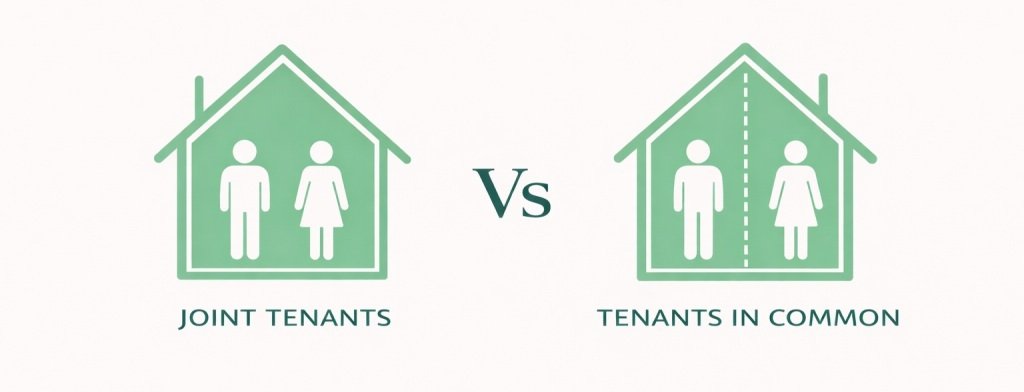
Joint tenancy is a form of property ownership where all owners have equal rights to the entire property.
Rather than owning individual shares, each owner is treated as owning the property together. This means no single owner has a larger legal interest than another, even if one person contributed more towards the purchase price.
One of the defining features of joint tenancy is the right of survivorship. If one owner dies, their interest in the property automatically passes to the surviving owner or owners. This happens regardless of what is written in the deceased person’s will.
For this reason, joint tenancy is often chosen by married couples and long-term partners who want ownership to transfer automatically after death.
What Are Tenants in Common?
Tenants in common is another form of joint ownership, but it works differently.
Instead of owning the whole property together, each owner holds a separate share. Those shares can be equal, but they do not have to be. For example, one owner might own 70% of the property while another owns 30%.
Unlike joint tenants, there is no automatic right of survivorship.
If one owner dies, their share forms part of their estate and can be left to whoever they choose in their will. If there is no valid will, the share will usually be distributed according to the relevant inheritance rules.
This flexibility makes tenants in common a popular option where buyers contribute different amounts towards the purchase or want greater control over how their share passes after death.
Which Option Is Right for You?
There is no single answer because the right choice depends on your personal circumstances.
Joint tenancy is often suitable for couples who see the property as a shared asset and want ownership to pass automatically if one partner dies.
Tenants in common may be more appropriate where buyers contribute different amounts, wish to protect their individual financial interests or want the freedom to leave their share to someone other than the co-owner.
The decision can also become important if relationships change in the future. Property ownership is often one of the issues considered when couples separate, making it worthwhile to understand the legal implications from the outset. If a marriage breaks down, understanding the grounds for divorce can also help explain the legal process that may follow alongside decisions about jointly owned property.
Before deciding how to own a property, it’s sensible to consider both your current circumstances and your long-term plans.
Can You Change the Way You Own a Property?
Yes. Choosing one ownership arrangement does not necessarily mean it must remain that way forever.
In many cases, joint tenants can later change their ownership to tenants in common through a legal process known as severing the joint tenancy.
People often choose to do this after significant life events, such as marriage breakdown, estate planning or changes in financial circumstances.
Changing ownership usually requires legal documentation and, depending on the circumstances, professional advice may be beneficial to ensure the process is completed correctly.
Common Mistakes When Choosing Joint Ownership
Many buyers concentrate on completing the purchase without fully understanding the legal consequences of their ownership decision.
Some of the most common mistakes include:
- Assuming every co-owner must own an equal share of the property
- Overlooking how ownership affects inheritance and wills
- Failing to record unequal financial contributions
- Choosing an ownership structure without considering future changes in personal circumstances
Taking time to understand these issues before completing the purchase can help avoid complications later.
Questions to Ask Before Buying Together
Before deciding whether to own a property as joint tenants or tenants in common, it helps to ask a few practical questions.
Consider whether:
- Everyone is contributing equally towards the purchase
- You want your share to pass automatically to the other owner
- You would prefer the flexibility to leave your share to someone else in your will
- Your personal or financial circumstances could change in the future
Thinking through these questions early can help you choose an ownership arrangement that reflects both your current needs and your long-term intentions.
Final Thoughts
Choosing between joint tenants and tenants in common is an important legal decision that can have lasting consequences.
While both ownership structures allow two or more people to own the same property, they offer different rights when it comes to inheritance, ownership shares and future planning.
Understanding how each arrangement works before purchasing a property can help you make an informed decision and reduce the risk of disputes later.
If you’re unsure which option is most appropriate, obtaining independent legal advice before completing the purchase can provide valuable clarity.