

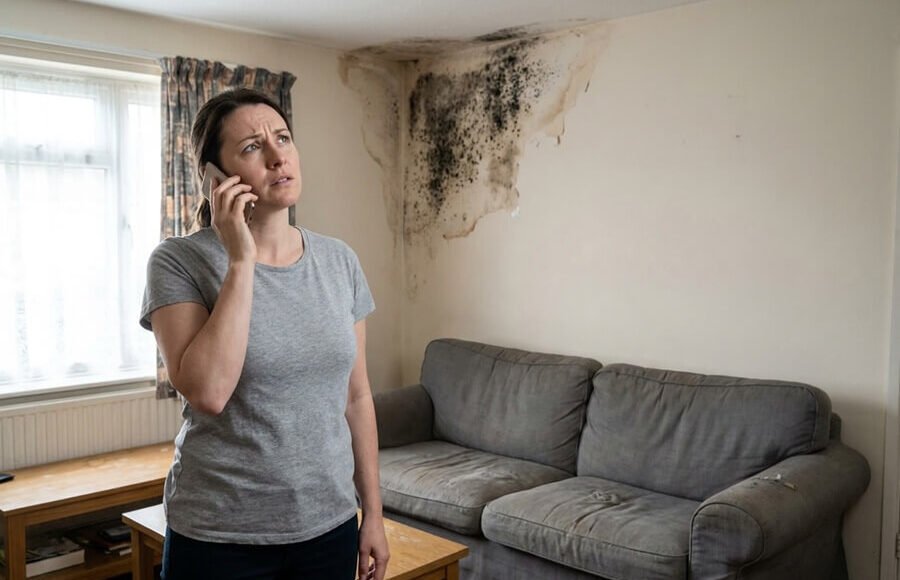
Damp and mould compensation becomes available once your landlord knew about the problem and failed to fix it within a reasonable time, and recent changes under Awaab’s Law have made that timeframe far more specific than it used to be, though only for social housing tenants so far.
Evaluate Yourself
- Evaluate Yourself: you’re renting and your landlord knew about the damp or mould but hasn’t fixed it
- Doesn’t apply yet: you own your home, or you haven’t actually reported the problem to your landlord in writing
- Realistic outcome: most successful claims settle somewhere between a few hundred pounds and several thousand, depending on severity and how long it’s gone on
- Typical timeframe: a few months from first complaint to resolution, longer if the case ends up in court
Ignoring a written report is a choice, not an oversight, and the law treats it that way.
What’s Ahead
- When your landlord is legally responsible for damp and mould?
- What Awaab’s Law actually changed, and importantly, who it currently applies to?
- Realistic compensation figures, not just “it depends on your case”
- A separate route most tenants don’t know exists: rent repayment orders
- What genuinely strengthens a claim, and one common mistake that can undo it?
Damp and mould compensation applies when a landlord has failed to fix a problem they knew about, within a reasonable time, and that failure has caused you harm, whether that’s damage to your belongings, an effect on your health, or a home that’s become genuinely unpleasant to live in. Recent changes to housing law have made landlords’ obligations considerably clearer than they used to be, which is worth understanding before assuming your situation is just something you have to live with.
When Your Landlord is Actually Liable?
Under Section 11 of the Landlord and Tenant Act 1985, your landlord is responsible for keeping the structure and exterior of your home in repair, along with the installations for water, heating, and sanitation, the kind of faults that commonly lead to damp in the first place, like a leaking roof, faulty guttering, or a failed damp proof course. Separately, the Homes (Fitness for Human Habitation) Act 2018 requires that your home is genuinely fit to live in throughout your tenancy, not just at the point you moved in. Where damp or mould stems from one of these underlying issues rather than how you personally live in the property, your landlord is generally responsible for fixing it.
What Changed Under Awaab’s Law?
This is the part that’s genuinely new, and it’s the biggest shift in this area of law in years. Awaab’s Law came into force on 27 October 2025, and it gives social landlords fixed, enforceable timeframes for dealing with reported damp and mould: 24 hours to investigate anything that looks like an emergency health hazard, and a set number of working days to actually begin fixing it once identified. It exists specifically because a two-year-old boy, Awaab Ishak, died from a respiratory condition linked to mould his family had repeatedly reported and that was never properly fixed.
There’s an important nuance worth being clear about. Awaab’s Law currently applies to social housing, meaning council and housing association tenants, not to private rented accommodation. If you’re a private tenant, your rights still exist under the Landlord and Tenant Act 1985 and the Homes (Fitness for Human Habitation) Act 2018, but the strict Awaab’s Law timeframes aren’t yet a legal requirement for private landlords, though the Renters’ Rights Act 2025 has separately classified serious damp and mould as making a property “non-decent,” which strengthens the wider legal picture even for private tenants.
How Much Compensation can you Actually Get?
There’s no fixed tariff, but real patterns exist rather than a vague “it depends.” Courts commonly calculate compensation as a percentage of the rent paid during the period the problem went unaddressed, an approach reflected in cases like Wallace v Manchester City Council, where awards in the region of 25% to 50% of rent for a serious, ongoing problem aren’t unusual. In practical terms:
- Minor, contained issues affecting a single room might settle from around £200
- Moderate, ongoing problems commonly settle somewhere between £3,000 and £15,000
- Severe cases involving significant health impact or extensive property damage can exceed that range considerably
On top of general compensation for the condition of the property itself, you can typically also claim separately for damaged belongings, increased heating costs from trying to combat the damp, and any documented health-related costs.
Rent Repayment Orders is Something to Know!
This is something a lot of tenants aren’t aware exists. In certain circumstances, particularly where a landlord has seriously neglected their legal obligations or the property is unlicensed where a licence is required, a tenant can apply to a tribunal for a rent repayment order, requiring the landlord to repay a portion of the rent already paid, separately from any disrepair compensation. It’s a distinct legal route from a standard damp and mould claim, and it’s worth raising with a solicitor as an additional option rather than assuming compensation is the only avenue available.
What Evidence Actually Strengthens a Claim?
Given how strictly Awaab’s Law now measures response times, dates matter more than they used to. Photos and videos with visible timestamps, written reports to your landlord (even a follow-up text after a phone call counts), and a simple dated log of when symptoms, damage, or communication happened all carry real weight. If the damp or mould has affected your health, telling your GP and explicitly mentioning that it’s housing-related creates a medical record that can meaningfully support a claim later.
What Not to Do?
One mistake comes up repeatedly and can genuinely undermine an otherwise strong case: withholding rent in protest. It feels like a natural response when a landlord isn’t acting, but it puts you in breach of your own tenancy, and can lead to eviction proceedings even in a situation where the landlord is clearly the one at fault. Keep paying rent as normal, and pursue the disrepair issue through the proper channels instead.
Let’s Break It Down
A tenant in a housing association property notices black mould spreading across a bathroom ceiling and reports it by email, including photos with visible dates. Under Awaab’s Law, the landlord is required to investigate within a set timeframe, but three weeks pass with no contact. The tenant follows up in writing again, keeping copies of everything, and eventually escalates the complaint to the Housing Ombudsman. With a clear paper trail showing exactly when the problem was reported and how long the landlord failed to respond, the tenant is later able to demonstrate a straightforward breach of the landlord’s obligations, strengthening both the disrepair claim and the ombudsman complaint.
What to Do If You’re Dealing With This
- Report the problem to your landlord in writing, even if you’ve already told them verbally
- Keep dated photos, videos, and copies of every message exchanged
- If you’re a social housing tenant, check whether Awaab’s Law timeframes have been missed
- Get advice from a solicitor who handles housing disrepair claims before deciding on next steps
Quick Answers
Not currently. Awaab’s Law applies to social housing (council and housing association properties), while private tenants rely instead on the Landlord and Tenant Act 1985 and the Homes (Fitness for Human Habitation) Act 2018 for their protections.
Most claims resolve within a few months if settled directly with the landlord, though cases that proceed to court can take considerably longer, sometimes closer to a year.
Yes. Owing rent and having a valid disrepair claim are treated as two entirely separate legal matters, and one doesn’t cancel out the other.
Landlords sometimes point to things like drying clothes indoors or not opening windows, but they can’t rely on this defence unless they can clearly show that lifestyle factors are genuinely the sole cause, rather than an underlying structural issue like poor insulation or a leak.