

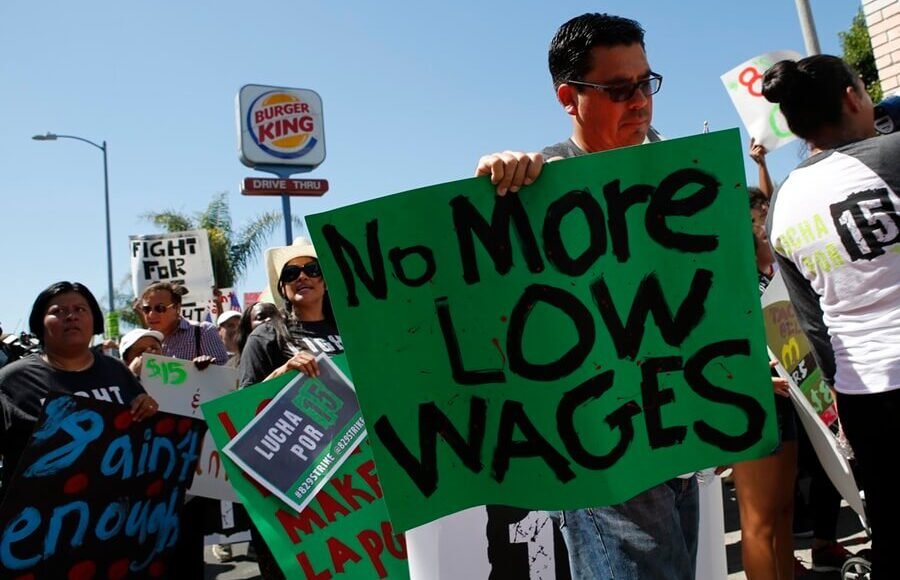
The National Minimum Wage is the lowest hourly rate an employer is legally allowed to pay most workers in the UK. It applies whether you’re full-time, part-time, on a zero-hours contract, or working through an agency, and paying someone below it isn’t a grey area. It’s a breach of the law.
Current Minimum Wage Rates
The rate you’re entitled to depends on your age and whether you’re an apprentice:
- Age 21 and over (National Living Wage): £12.71 an hour
- Age 18 to 20: £10.85 an hour
- Age 16 to 17: £8.00 an hour
- Apprentices aged 16-18, or first-year apprentices aged 19 and over: £8.00 an hour
These rates are reviewed and updated each April, so it’s worth checking the current figure against the GOV.UK minimum wage calculator rather than relying on a number you were told a year or two ago.
Who Is and Isn’t Entitled to It
Most people who work are covered by the minimum wage, including casual staff, zero-hours workers, and agency workers, regardless of whether you’ve got a written contract at all. Even people whose paperwork says “self-employed” can still count as a worker in the eyes of the law, depending on how the arrangement actually functions day to day. This applies even to those working without an employment contract, since entitlement is based on the reality of your working relationship, not on whether a document exists.
There are some genuine exceptions. You’re not entitled to the minimum wage if you’re under 16, serving in the armed forces, a genuine volunteer, in prison, or in certain training and internship arrangements, though the rules around trainees are complicated enough that it’s worth getting specific advice if you’re unsure which category you fall into.
Common Ways Employers Get This Wrong
Underpayment isn’t always deliberate, and it isn’t always obvious from your payslip either. A few patterns come up repeatedly. Employers deduct the cost of a required uniform from wages, which can drag your effective hourly rate below the legal minimum even if the number printed on your payslip looks fine. Time spent on mandatory training courses sometimes goes unpaid, even though it legally counts as working time. Travel time between appointments, common in care work and similar roles, is often left out of pay calculations entirely. And some employers try to argue that tips or benefits like free meals “top up” your pay to the minimum wage, when in fact you’re entitled to the wage on top of anything like that, not instead of it.
What Happens to Employers Who Underpay?
This is worth knowing, because it changes how seriously a complaint is likely to be taken. HMRC can investigate underpayment going back up to six years, and employers found to be in breach face a penalty of up to 200% of the amount owed, capped at £20,000 per worker. On top of that, HMRC regularly publishes a public “naming and shaming” list of employers who’ve broken minimum wage law, and in the most recent round, over 385 employers were named, having underpaid around 60,000 workers by a combined £7.3 million. Reporting genuine underpayment isn’t a minor administrative complaint. It triggers a system with real financial and reputational consequences for the employer.
The Fair Work Agency Law
From 7 April 2026, enforcement of minimum wage law moves to a new body called the Fair Work Agency, created under the Employment Rights Act 2025. It brings together HMRC’s minimum wage enforcement team, holiday pay and sick pay oversight, and labour exploitation enforcement under a single regulator, with expanded powers including workplace inspections and the ability to take legal action directly on a worker’s behalf. In practice, this means underpayment complaints should be investigated by a more consolidated, better-resourced body than the fragmented system that existed before.
Let’s Understand with an Example
Someone working on a zero-hours contract in retail is required to buy and wear a branded uniform, the cost of which is deducted directly from their wages over the following few pay periods. Their hourly rate on paper matches the minimum wage exactly, but once the uniform deduction is factored in, their actual pay for those hours drops below the legal minimum. In a case like this, working out the real effective hourly rate after deductions, using the GOV.UK calculator with the deduction included, would reveal the shortfall clearly enough to raise with the employer or report to HMRC.
What to Do If You’re Being Underpaid?
- Check your payslips against the current minimum wage rate for your age, factoring in any deductions
- Request your pay records in writing if you’re unsure how your pay was calculated, your employer must provide these within 14 days
- Contact Acas for free, confidential advice on your specific situation
- If informal resolution doesn’t work, you can raise a grievance, go through Acas early conciliation, and ultimately bring a claim to an employment tribunal, though note the time limit for this is changing from 3 months less a day to 6 months less a day from October 2026
Quick Answers
No, zero-hours workers are entitled to the same minimum wage rate as anyone else for the hours they actually work.
They don’t. You’re entitled to the minimum wage on top of tips, service charges, or other benefits, not instead of them.
HMRC can investigate underpayment going back up to six years, though the time limit for bringing a tribunal claim yourself is considerably shorter.
Not necessarily. You can ask ACAS not to name you when HMRC contacts your employer, and you’re legally protected from unfair dismissal for reporting a genuine concern, though in practice it’s worth being aware this protection doesn’t always stop an employer from reacting badly.