

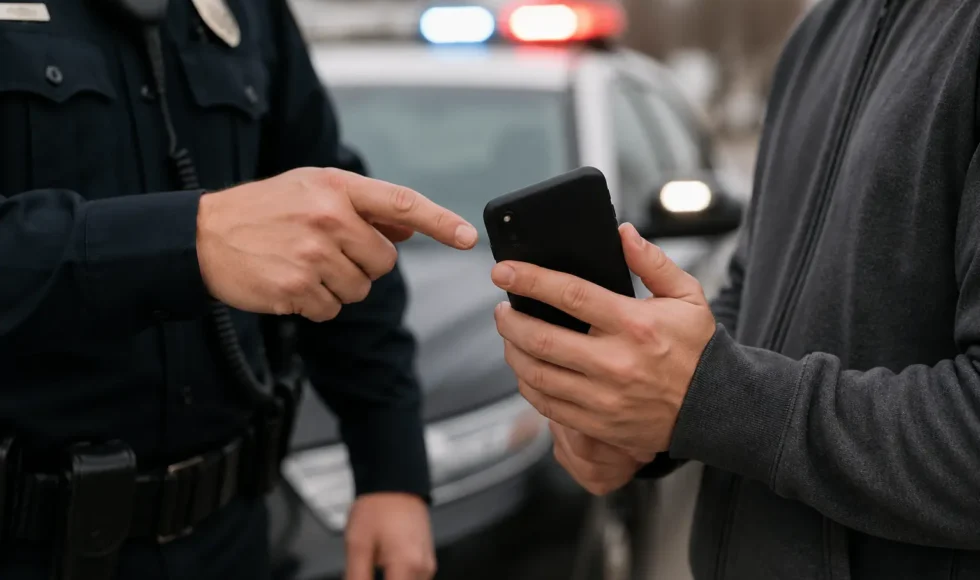
Your phone is not just a device. It holds your messages, photos, banking apps, location history, emails, passwords, and private conversations. That is why police phone searches are treated differently from checking your pockets, wallet, or bag.
In most cases, police cannot search your phone without your permission or a valid search warrant. In the U.S., the Supreme Court ruled in Riley v. California that police generally need a warrant before searching the digital contents of a phone, even if the phone was taken during an arrest.
Can Police Take Your Phone?
Yes, police may be able to take or seize your phone in certain situations, especially if you are arrested or if they believe the phone contains evidence.
But taking the phone is different from searching it.
For example, an officer may hold your phone to prevent evidence from being deleted. However, they usually cannot open it, read your messages, check your photos, or go through your apps without a warrant or your consent.
When Can Police Search Your Phone?
1. If You Give Permission
Police can search your phone if you voluntarily allow them to.
This is called consent.
For example, if an officer says, “Can I look through your phone?” and you say yes, that may give them legal permission to search it.
You have the right to say:
“I do not consent to a search of my phone.”
You should say this calmly and clearly. Do not argue, resist, or physically pull the phone away.
2. If They Have a Search Warrant
A search warrant is written permission from a judge. It allows police to search specific places or items for specific evidence.
If police have a valid warrant for your phone, they may be allowed to search it within the limits of that warrant.
For example, the warrant may allow them to search messages, call logs, photos, or app data related to a specific investigation.
3. In an Emergency Situation
There are limited emergency exceptions.
Police may argue they need to search a phone quickly if there is an immediate danger, such as:
- Someone’s life is at risk
- A child is missing
- There is an active threat.
- Evidence may be destroyed in a serious emergency.
Even then, the situation must usually be urgent and legally justified. The Supreme Court’s phone-search rule still recognizes only narrow emergency exceptions.
4. At Borders or Airports
Phone searches at borders can be more complicated. Border officers may have broader powers than regular police, but courts have been actively reviewing how far those powers go, especially for forensic searches of phones and laptops.
Because this area is changing, anyone facing a border phone search should get legal advice based on their location and circumstances.
When the Police Usually Cannot Search Your Phone
Police usually cannot search your phone just because:
- They stopped you on the street
- They pulled you over for a traffic violation.
- They arrested you
- They are curious about your messages.
- They believe you are hiding something, but do not have a warrant.
- You are carrying the phone in your pocket.
The key point is this: an arrest does not automatically give police the right to search your phone’s contents. The Supreme Court made clear that digital data on a phone deserves stronger privacy protection because phones contain massive amounts of personal information.
Can Police Force You to Unlock Your Phone?
This depends on the law in your jurisdiction.
In some places, courts treat passcodes differently from fingerprints or face unlock. A passcode may be considered something you know, while a fingerprint or face scan may be treated differently.
Because laws vary, the safest general approach is:
- Do not share your passcode unless you have spoken with a lawyer.
- Say clearly that you do not consent to a search.
- Do not physically resist.
- Ask for a lawyer if you are being questioned.
What Should You Do If Police Ask to Search Your Phone?
Stay calm.
Ask:
“Do you have a warrant?”
If they do not, you can say:
“I do not consent to a search of my phone.”
If you are being detained or arrested, ask:
“Am I free to leave?”
or
“I would like to speak with a lawyer.”
Do not delete anything, hide evidence, or lie to the police. That can create more serious legal problems.
Final Answer
In most cases, police cannot search your phone without permission or a warrant. They may be able to take the phone in certain situations, but searching its contents is different. Your phone contains highly private digital information, so the law usually requires stronger protection before police can access it.
This blog is for general information only and is not legal advice. Local laws may vary, so anyone facing a police phone search should speak with a qualified lawyer.